
Project Proposals
Project proposals from mentors for the Sentient Futures Project Incubator. Filter by topic and approach, then apply to your top three.
Rethink Priorities' Moral Weight Project V2
There are several sub-projects associated with the second version of the Moral Weight Project. For instance, you might spend your time trying to find good proxies for differences in attentional bandwidth across species. Or you might think about how to compare the relative prudential value of various hedonic and non-hedonic goods. Or you might work on adapting the hierarchical Bayesian approach that we used for RP's Digital Consciousness Model to this current purpose.

AI & the future of farmed animal welfare
Dr. Walter Veit is an award-winning philosopher, author, and lecturer. He authored over 100 academic publications as well as several books on the nature of consciousness, evolutionary theory, and how we can understand what goes on in the minds of other animals. He has travelled all over the world to speak about his research, meeting the Dalai Lama in India, bomb-sniffing Rats in Tanzania, mischievous corvids in Cambridge, and self-aware cleaner fish in Japan.
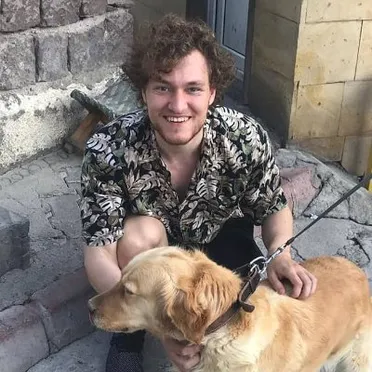
Director @ Myrias & food industry expert
Myrias is a global venture studio for animal welfare. Nonprofit or for-profit, we build whatever the problem needs and aim it at the largest, most neglected sources of suffering. The evidence sets our priorities, and the evidence points first to China, where more than half of the world's farm animals are raised. We are looking for a talent for researching new areas.

Artificial sentience & digital minds research
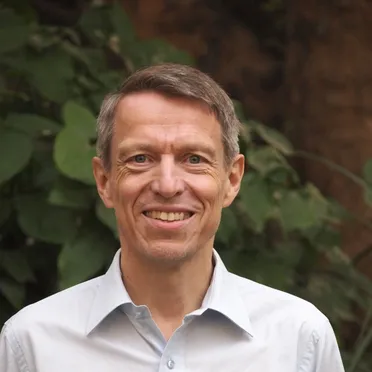
Soenke Ziesche holds a PhD in Natural Sciences from the University of Hamburg, earned within the university’s doctoral programme in AI. He authored Digital Minds 1.0 - AI Welfare, Ethics, and Beyond and co-authored Considerations on the AI Endgame with Roman V. Yampolskiy. Since 2000, he has served with the United Nations, working at UN Headquarters in New York and on field missions in Palestine, Sri Lanka, Pakistan, Sudan, Libya, South Sudan, Bangladesh, Maldives and India. While in Libya, he temporarily acted as the highest UN representative during the revolution in 2011. In Maldives, he also worked as Senior Researcher for AI at the Maldives National University, where he started his work on digital minds in 2018. He is a member of the UNESCO AI Ethics Experts without Borders Network.
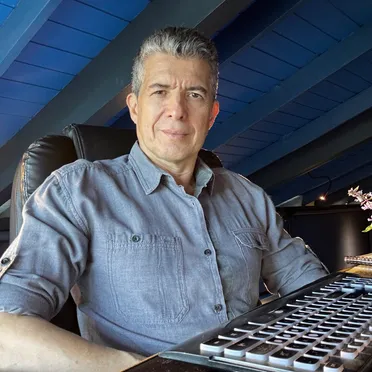
Animal Welfare Program Manager at Ambitious Impact + Shrimp Welfare Project Cofounder
Co-founder of Shrimp Welfare Project, now running the animal welfare incubation programme at AIM. PhD in AI, with past work on AGI risk — so I care a lot about where emerging tech meets animal advocacy. As a mentor I'm at my best helping people turn a fuzzy idea into a concrete, well-scoped project.

Self-awareness in LLMs
- Developing further behavior-based tests for endogenous goals in LLMs.
- MechInterp investigations into the representations underlying apparent sandbagging and external cued increases in effort found in my recent research.
- Investigating the causal role of chain-of-thought it apparently more self-aware behaviors in reasoning models.
- Investigating the degree to which models maintain a persistent identity across contexts. One way to test this is to monitor pronoun usage, which has been linked to emerging self-awareness in children; when do models signal identification with whatever “part” they are playing with the user, vs their own identity as an AI?
- Human studies: Establish a gold standard for self-awareness metrics to compare AIs against.
- Conceptual: Build a better theoretical account of the components of self-awareness found in biology, and come up with other LLM-appropriate or architecture-agnostic paradigms to elicit self-awareness signatures.

Transformative AI alignment with non-humans
- How mid-training compassion data scales (both data scaling and model scaling projects)
- Analysis of open-source Huggingface training data (e.g. The Pile) and their content related to animal welfare
- Why does SFT erase mid-trained compassion more than RLAIF? Use mech-interp techniques to find out.
The expected output of all these projects is solid research output that can be turned into a paper given enough time and results

AI for comparative animal welfare science
This project is centered on the Ψ Interspecific Affect GPT, an experimental AI tool developed by the Welfare Footprint Institute to support interspecific affective comparisons within the Welfare Footprint Framework. The tool is available through WFI’s AI Tools and Applications page. The scientific rationale, methodological approach, and current workflow are described in this article. The initial focus is on provisional, evidence-informed hypotheses about the maximum plausible intensity of Pain that members of selected animal taxa may be capable of experiencing, expressed relative to human-anchored reference categories. These estimates concern potential affective capacity, not the intensity that animals ordinarily experience. For each taxon, the tool produces an explicit reasoning dossier addressing taxonomic scope, the plausibility of sentience, relevant neurobiological, behavioral, cognitive, pharmacological, evolutionary, and ecological evidence, competing hypotheses, arguments against the preliminary conclusion, uncertainty, a provisional affective-capacity ceiling, and priorities for further research. The project would test both the substantive interspecific conclusions and the broader research workflow. Expected outputs could include:
- critically audited dossiers for approximately three to five selected taxa;
- a structured dataset recording AI claims, citation checks, errors, omissions, human corrections, and unresolved uncertainties;
- an analysis of recurrent AI failure modes and variation across repeated runs;
- recommendations for improving the tool’s instructions, evidence standards, knowledge base, and evaluation protocol; and
- depending on the maturity of the results, a technical report, preprint, academic manuscript, EA Forum post, or a combination of these.
Build AI tools for the animal movement
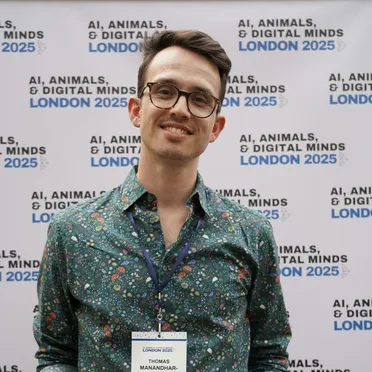
I am the AI Impact Director at Vegan Hacktivists, where my team and I provide pro bono AI consulting and automation services to the animal protection movement. I also create and teach free AI courses open to the entire animal movement under Amplify for Animals Prior to that I conducted social science and data science projects for animal orgs at Bryant Research as their research director. I have also done paid AI consulting work with many organisations in the movement. Prior to that i was a data scientist outside the movement building AI solutions for a variety of companies including Nike.
Animal advocacy, AI safety, & everything in between!
This project has two parts:
- Part one is a continuation from the proof-of-concept built in the first cohort
- Part two applies the proof-of-concept specifically to pro-animal values. The proof-of-concept has demonstrated the complex social dynamics of AI alignment, both in terms of competition and cooperation among different AI agents and in terms of the bi-directional value feedback loop between parent countries and AI labs. During this incubator, the aims are both to polish the general framework and to deep dive into how this framework impact pro-animal values. The tentative plan is to have separate mentees working on part one and part two, with part two being more flexible in scope and design. Depending on the mentees' skills and interests, part two can be more or less technical. The deliverable for part one is a paper and the deliverable for part two can be a report, a paper, and/or an interactive tool.